
Research projects

Lorem ipsum dolor sit amet, consectetuer adipiscing elit. Aenean commodo ligula eget dolor. Aenean massa.

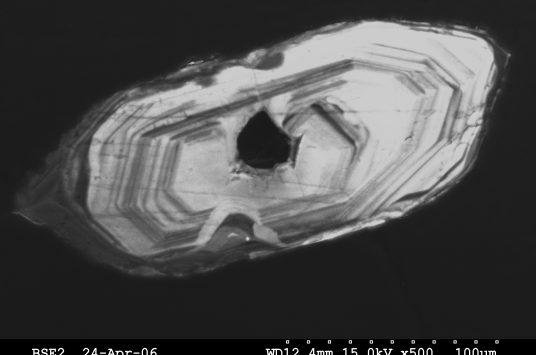
Project 1: What zircons tell us about the early Earth

During the Hadean (4.56 to 4 billion years ago) the Earth looked very different from now: it contained magma oceans and a poisonous atmosphere depleted of oxygen. What this exactly looked like is uncertain, while this knowledge is important to understand the environment the first lifeforms lived in.

Read more

Project 2: How the early Earth formed its atmosphere and oceans

After it formed about 4.56 billion years ago, the Earth was largely molten. When it cooled, the Earth began to crystallise, forming a solid crust. During solidification, gases escaped out of Earth’s interior. Among these was water vapour, which condensed and eventually formed the first oceans once the Earth’s surface had cooled sufficiently.

Read more

Project 3: What did the early Earth look like?

What did Earth’s climate look like during the Hadean? What chemicals and energy sources existed on Earth’s surface? And how did Earth protect itself against adverse effects, such as powerful radiation and extreme conditions? While the answers to these questions are crucial to understand how the first life originated, there is hardly any direct evidence.

Read more

Project 4: What did Hadean oceans consist of?

Earth’s climate is closely linked to the cycling and distribution of silica (SiO2) – a common compound that forms the basis of sand, quartz, and rocks. During weathering, silica-rich minerals dissolve, causing CO₂ to be absorbed and the acidity (pH) to decrease.

Read more

Project 5: How did information processing develop in early life?

Organisms use complex molecules like RNA, DNA, and proteins to store, process, and pass on information. These molecules are made from building blocks like amino acids, sugars and nucleotides, which were formed billions of years ago through simple chemical reactions.

Read more

Project 6: From building blocks to life functions

Life started with chemical reactions between prebiotic building blocks. Those include amino acids, sugars and fatty acids that can be made via regular chemical reactions that do not require life. These reactions likely began relatively simple, but grew in complexity over time.

Read more

Project 7: Where chemistry meets biology

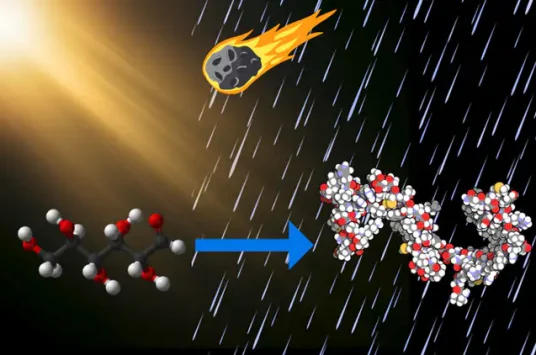
The origin of life depends not only on the presence of water on Earth, but also on where building blocks came from and where the chemical reactions were most active. If organic substances were for instance transported to Earth from space, the same prebiotic building blocks might also form the basis of life on other planets.

Read more

Project 8: How did the predecessors of cells originate?

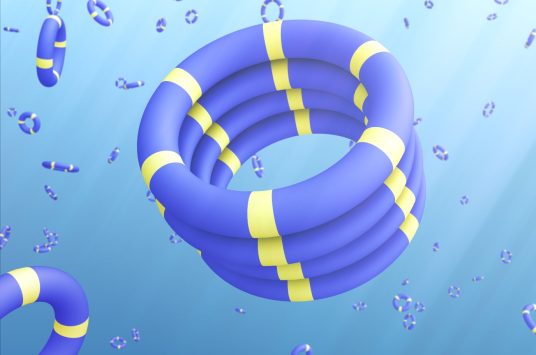
In the Late Hadean (between roughly 4.1 and 3.8 billion years ago), molecules started to organise themselves into simple compartments. From these originated protocells: primitive, cell-like structures composed of vesicles bounded by membranes that formed spontaneously from amphiphilic molecules.

Read more

Project 9: How do you increase the evolvability of chemical systems?

Researchers have already developed chemical systems capable of self-replication out of relatively simple organic molecules. One such system recently exhibited a kind of primitive, basic evolution in line with Darwin’s principles (i.e. one in which selection and reproduction are already beginning to take effect).

Read more

Project 10: From self-replicating molecules to complex behaviour

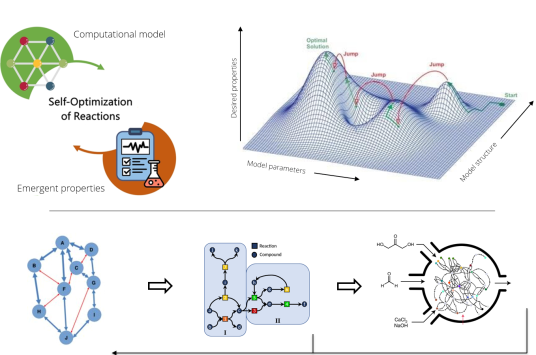
Darwinian evolution, including variation, selection, and reproduction, is a key property of life as we know it. Probably, this process also played a big role in the origin of life: from a simple beginning, prebiotic molecules could grow in complexity.

Read more

Project 11: How do you recognise the oldest fossils?

Determining in what environment the oldest microfossils existed and how they lived leads to a better understanding of the origin of life. This can only be achieved if we can confidently differentiate these oldest microfossils from structures that were formed without the need for life, but that look a lot like them.

Read more

Project 12: How do Earth-like planets originate?

Our solar system more or less originated like this: a big cloud of gas and dust collapsed under the force of gravity, with the Sun forming at its centre. Around it, a rotating disc formed, within which the remaining material coalesced into planets, moons, and other celestial bodies.

Read more

Project 13: How do organic molecules survive in ice?

When Earth formed, gas, dust and ice in our solar system coalesced into a rotating disc around the young Sun. Research shows that dust particles in molecular clouds readily collect layers of ice that contain volatiles and organic molecules.

Read more

Project 14: Is life possible on icy moons?

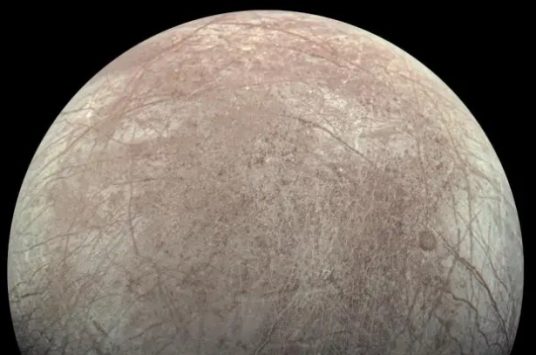
At the edge of our solar system, icy moons like Enceladus (Saturn) and Europa (Jupiter) hide liquid ocean beneath a thick crust. These oceans are regarded as some of the most promising places for extraterrestrial life, despite their dissimilarity from Earth.

Read more

Project 15: Improving doubts and misunderstandings

The origin of life composes an interesting research theme that makes students familiar with different areas of science. Many students however have a simplified image of how life on Earth originated. In reality, it is about complex conditions and processes.

Read more