


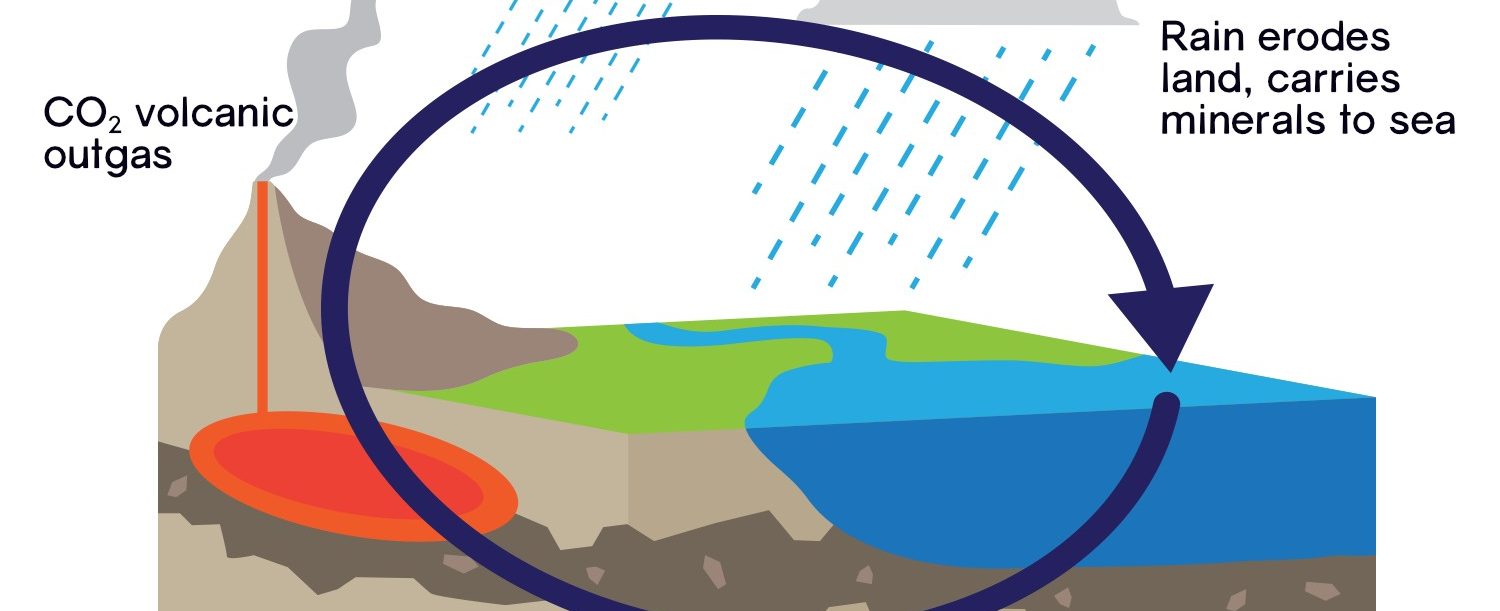
Earth’s climate is closely linked to the cycling and distribution of silica (SiO2) – a common compound that forms the basis of sand, quartz, and rocks. During weathering, silica-rich minerals dissolve, causing CO₂ to be absorbed and the acidity (pH) to decrease. In the oceans, clay minerals and carbonates can then precipitate, processes which in turn produce acidity. Together, these processes determine how CO₂ is exchanged between the oceans and the atmosphere and influence the pH of ocean water.

It is not known exactly how the cycle and distribution of silica worked during the Hadean. Researchers are therefore unsure, for example, exactly how acidic Hadean oceans were. This uncertainty stems partly from a lack of data, but also from the fact that climate models do not yet fully understand the underlying processes – such as the formation of clay minerals and how this depends on pH, oxygen availability, saturation, solubility and the cycling of cations (positively charged particles that play a key role in chemical reactions and the transport of substances).
This project investigates the chemistry of Hadean oceans using experiments and thermodynamic models. This involves, among other things, drawing on insights from meteorites, which contain clay minerals that may differ from those found on Earth today.