


In the Late Hadean (between roughly 4.1 and 3.8 billion years ago), molecules started to organise themselves into simple compartments. From these originated protocells: primitive, cell-like structures composed of vesicles bounded by membranes that formed spontaneously from amphiphilic molecules (molecules with both hydrophilic and lipophilic parts). These protocells are regarded as possible precursors of modern cells and probably played a key role in the transition from a primordial soup of molecules to the first lifeforms on Earth
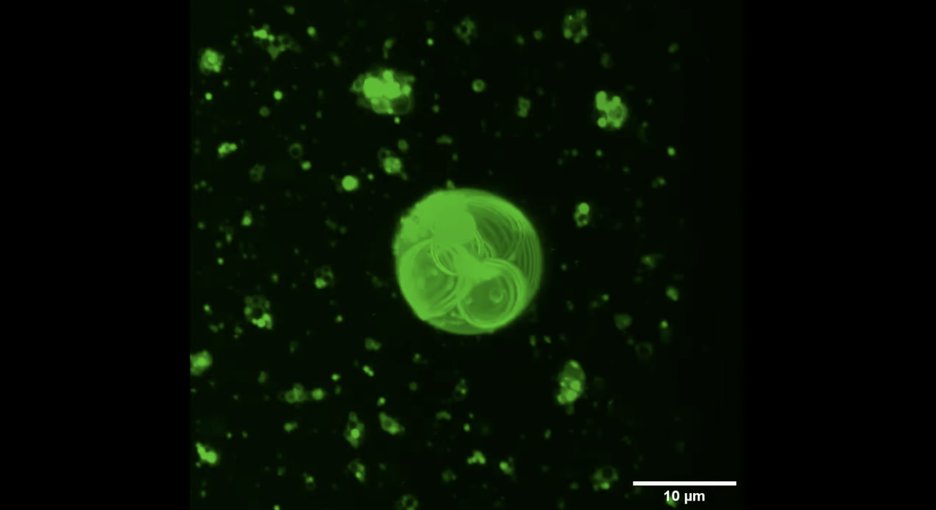
But how, when, and where these protocells originated is largely unclear to scientists. That’s because it is not yet known how the building blocks from which protocells were made exactly formed on Earth. This project experimentally investigates which protocells could have formed and whether or not these might have remained stable during the Late Hadean. Eventually, the researchers investigate which compartments might have acted as protocells in the Late Hadean and how stable these were under the conditions prevailing at the time.