


After it formed about 4.56 billion years ago, the Earth was largely molten. When it cooled, the Earth began to crystallise, forming a solid crust. During solidification, gases escaped out of Earth’s interior. Among these was water vapour, which condensed and eventually formed the first oceans once the Earth’s surface had cooled sufficiently.
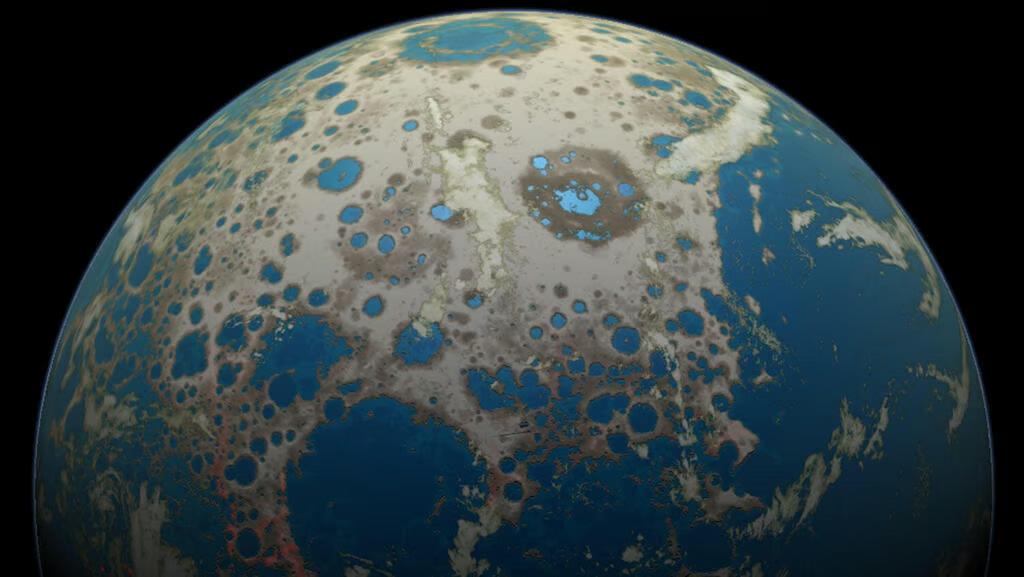
Little is known about the composition of the early atmosphere. For example: what was the redox state – the ratio of oxidised and reduced substances – of the Hadean atmosphere? How much water was included in the Earth’s mantle and on the surface, as our planet cooled? And how well was the atmosphere capable of blocking, absorbing, and dispersing ultraviolet radiation? This relates to the formation of HCN, CH₂O, CN₂H₂ en C₃HN – molecules that possibly played a role in shaping the first building blocks of life.
This project approaches these questions with laboratory experiments. Specific attention is given to how well important substances in the atmosphere dissolve under high pressure (P > 0.5 gigapascal) and under reduced conditions (oxygen fugacity lower than the iron-wüstite buffer). Furthermore, numerical models are used to simulate how the atmosphere, mantle, and oceans co-developed as the magma ocean solidified.