


At the edge of our solar system, icy moons like Enceladus (Saturn) and Europa (Jupiter) hide liquid ocean beneath a thick crust. These oceans are regarded as some of the most promising places for extraterrestrial life, despite their dissimilarity from Earth.
By studying these places, we can gain a better understanding of the extreme conditions under which life can or cannot arise, and whether extraterrestrial life might exist in our solar system.
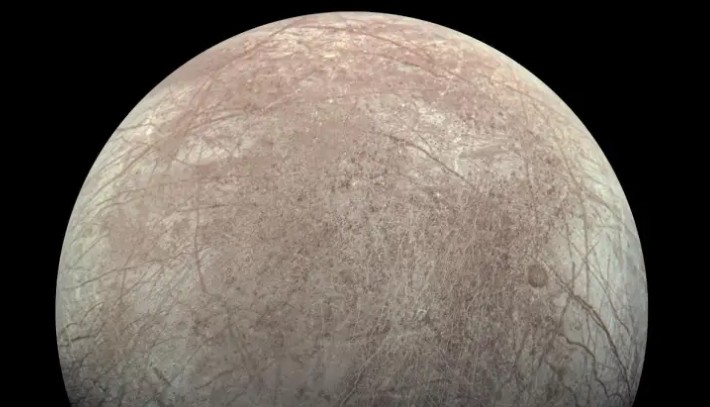
Even though humans for now cannot directly reach or sample these oceans, liquids and gas (containing salts and organic material) do occasionally escape to the surface. That happens in three ways. Firstly, ocean water can rise through cracks in the ice and quickly freeze. Secondly, droplets of liquid can be hurled upwards by powerful eruptions (plumes) and freeze on the way up. Thirdly, water vapour in those plumes can cool and form ice grains.
This project is conducting experimental research into these three processes bringing material from these oceans to the surface. It also examines how radiation alters the composition of the liquids and ice that reach the moon’s surfaces. Researchers are using observational data from the James Webb Space Telescope of selected moons to learn about the oceans beneath them and the origination of the cosmic material from which these moons were formed.