


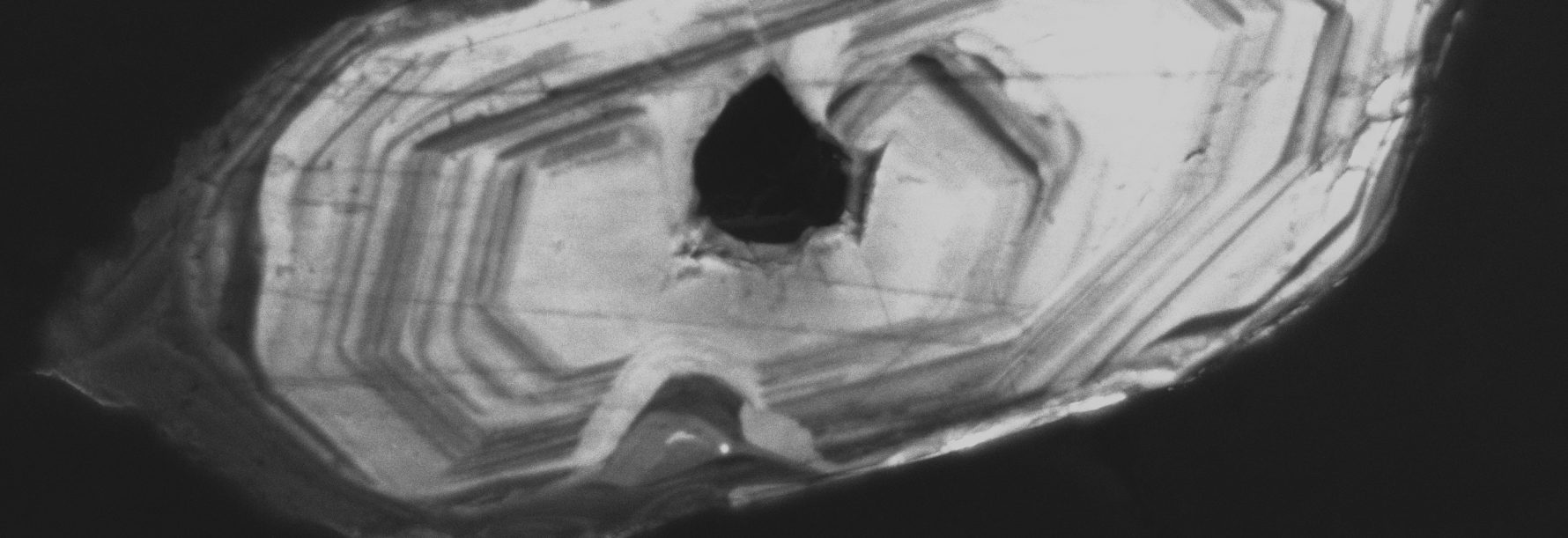
During the Hadean (4.56 to 4 billion years ago) the Earth looked very different from now: it contained magma oceans and a poisonous atmosphere depleted of oxygen. What this exactly looked like is uncertain, while this knowledge is important to understand the environment the first lifeforms lived in.
Researchers reconstruct past climates by using organic remnants from micro-organisms captured in rocks. For the first life on Earth, this is impossible: organic molecules did not yet exist. Furthermore, Hadean rocks have already been recycled within the Earth – the original information they contained has already been overwritten.

And there is a third option: investigating the chemical composition of Hadean zircons. These minerals hardly weather and – contrary to the rocks in which they are captured – are barely chemically altered at high temperatures. Therefore, they sort of ‘capture’ the conditions prevailing when they were formed.
However: there is too little experimental data showing what climate conditions made zircons change chemical composition.
This project investigates how oxygen, zirconium, and silicon partition between zircon and the magma from which is crystallizes, and how temperature, pressure, water, and magma composition influences that process.

Why Prelife
Lorem ipsum dolor sit amet, consectetur adipiscing elit
Cras sagittis feugiat fermentum. Quisque scelerisque risus sit amet urna sollicitudin mattis. Etiam non urna nunc. Nullam vulputate, dolor ac sollicitudin sollicitudin, risus libero feugiat elit, id blandit diam neque vitae tortor. Nam sed ultricies risus, id aliquam odio. Pellentesque vulputate tellus non urna semper, luctus fringilla nibh finibus. Nullam id pharetra quam, vel rutrum augue. Curabitur ullamcorper, nisi eu suscipit ullamcorper, neque libero molestie lectus, sit amet faucibus nisi ex et dui.
In blandit mattis leo et aliquet. Class aptent taciti sociosqu ad litora torquent per conubia nostra, per inceptos himenaeos. Ut risus nunc, bibendum consectetur rhoncus eget, dignissim sed diam. Pellentesque convallis orci ligula, non malesuada lorem vestibulum in. Integer et enim purus. Pellentesque habitant morbi tristique senectus et netus et malesuada fames ac turpis egestas. Curabitur ut ipsum venenatis, congue nisl nec, molestie mi. Nullam justo tellus, euismod vitae pretium a, tristique vitae sem. Sed molestie posuere tellus eget vulputate. Cras eu ligula ut risus blandit faucibus.