


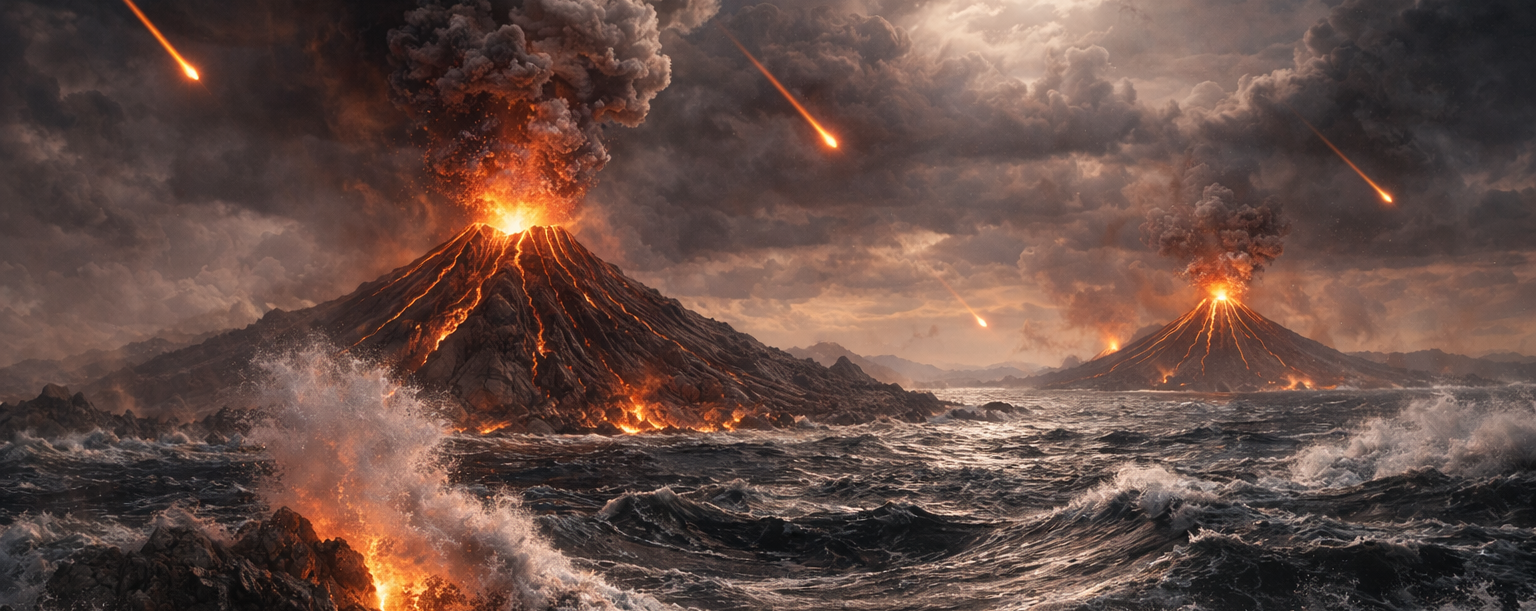
What did Earth’s climate look like during the Hadean? What chemicals and energy sources existed on Earth’s surface? And how did Earth protect itself against adverse effects, such as powerful radiation and extreme conditions? While the answers to these questions are crucial to understand how the first life originated, there is hardly any direct evidence. The only information is derived from a handful of robust minerals called zircons.
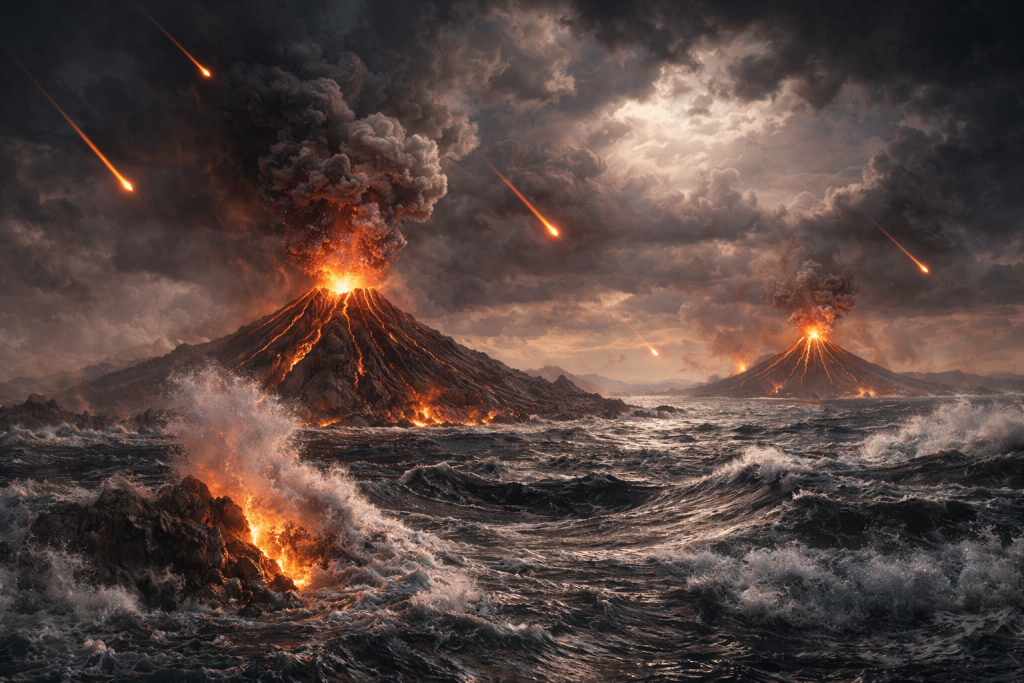
Earth’s physical and chemical properties during the Hadean (4.56 to 4 billion years ago) strongly depend on how the Earth’s surface and layout changed through time. Regarding the Archean (~4 to 2.5 billion years ago) researchers know that organisms lived on a planet Earth that had a solid crust, land, and oceans containing water.
This project investigates the boundary conditions for the origin of life, starting from various data on mantle composition and the thermic evolution of Earth. Using this data, it is modelled what topography might have existed during the Hadean and how long hills and mountains could have sustained in a much warmer and weaker crust than nowadays. Also, it is investigated if, and how much land potentially existed at various ocean volumes.